
The Utility Pole Project
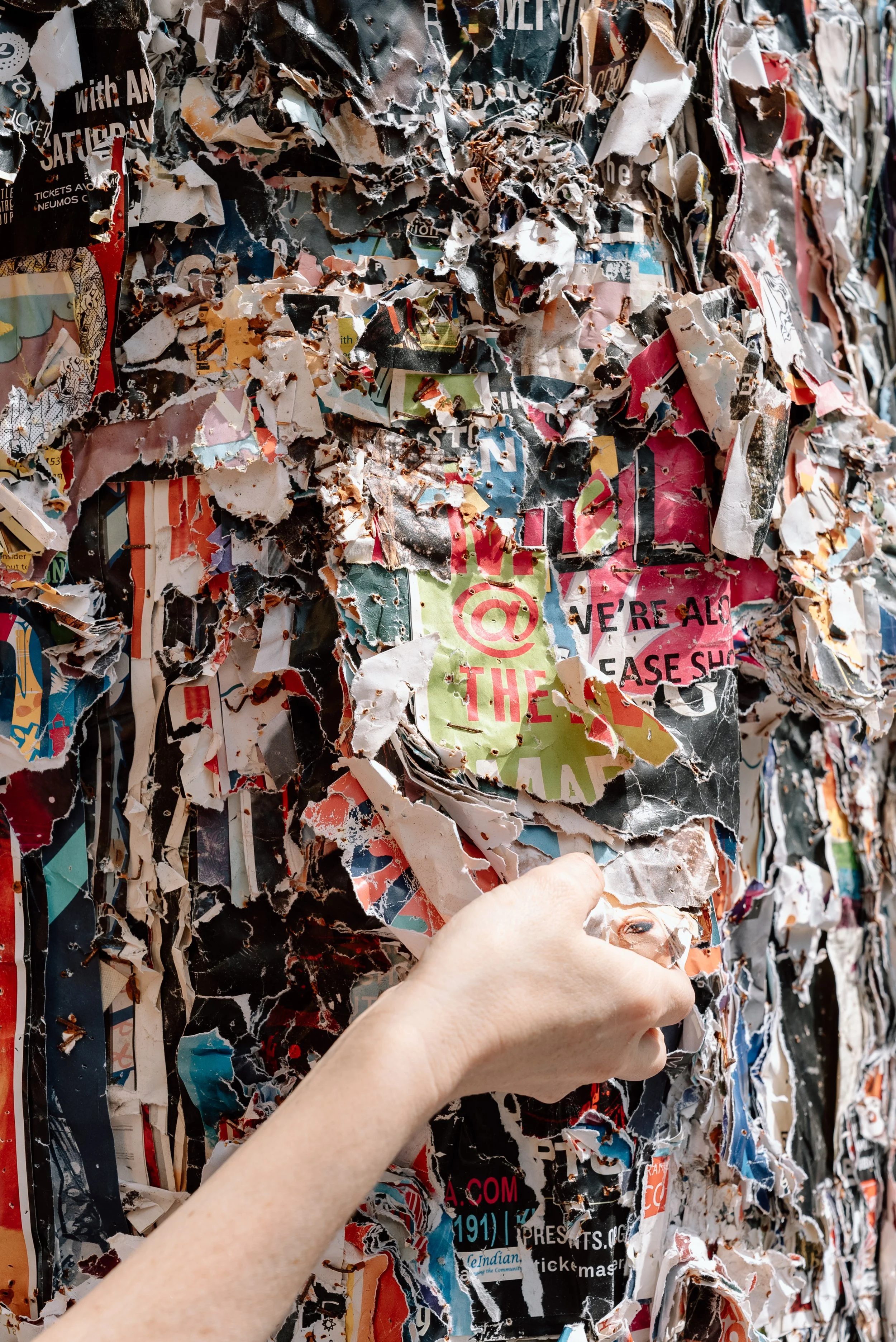
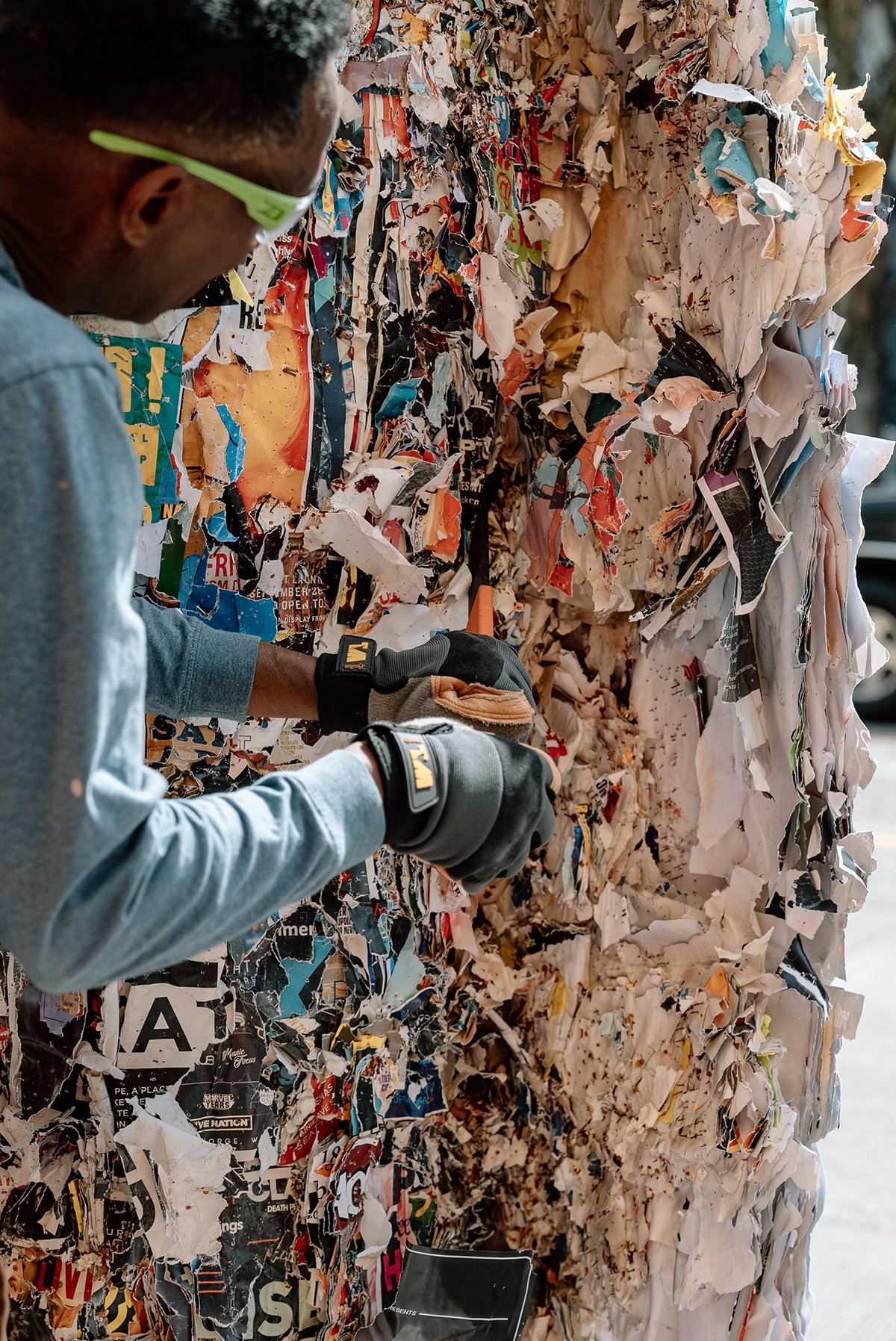
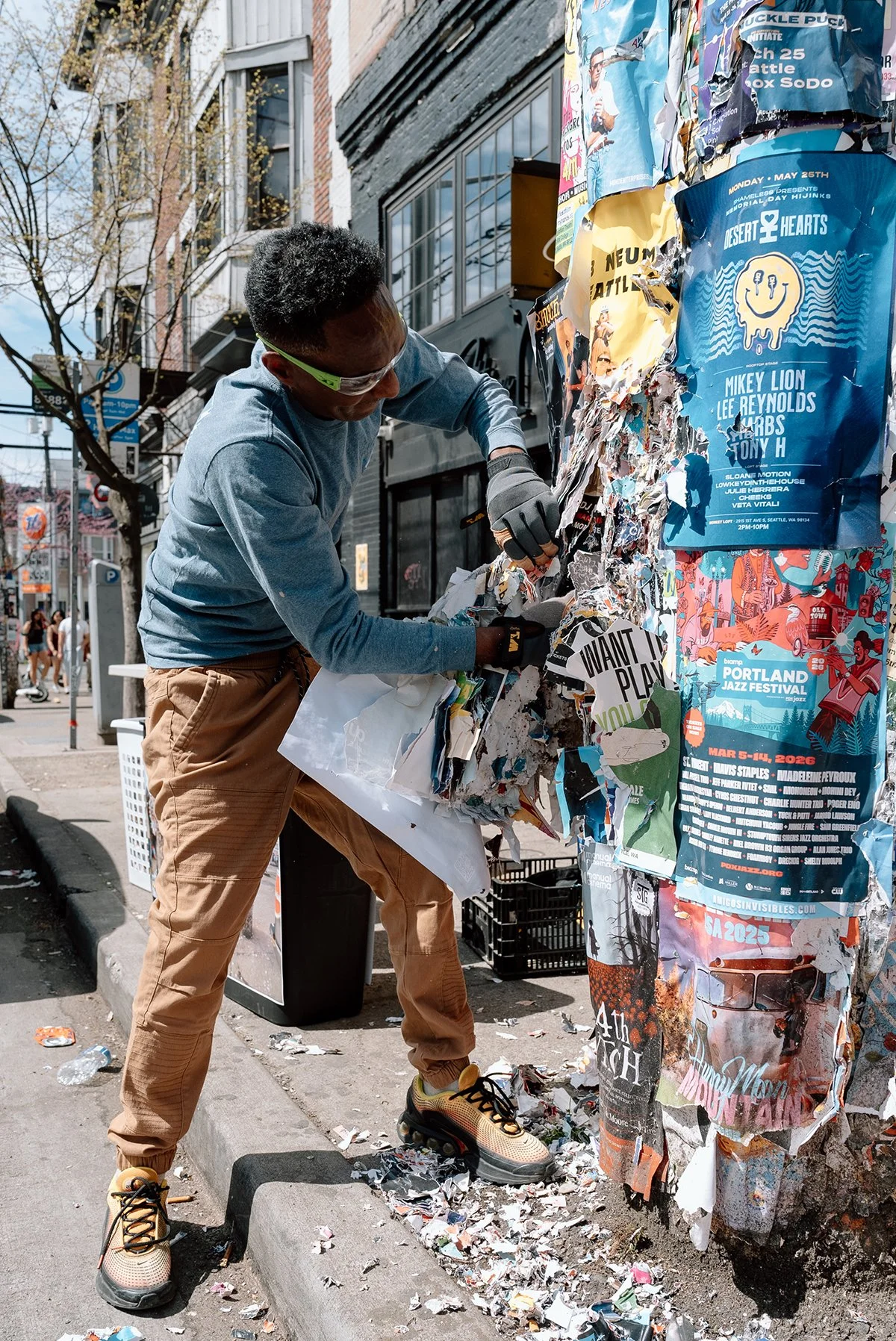
The Utility Pole Project combines fresh, originally designed posters with weathered posters harvested from Seattle’s utility poles to invoke hope, love, and resilience in the face of political and social violence and grief. I moved to Seattle in 1999 during the poster ban (1994 - 2004). The collective remains of rain-drenched, sun-bleached paper and rusted staples seduced me immediately. I documented them, began collecting chunks of them, and created original public and gallery-based artworks inspired by them. I’ve continued this practice of documenting, collecting, and creating with this uniquely local material culture for more than 26 years.
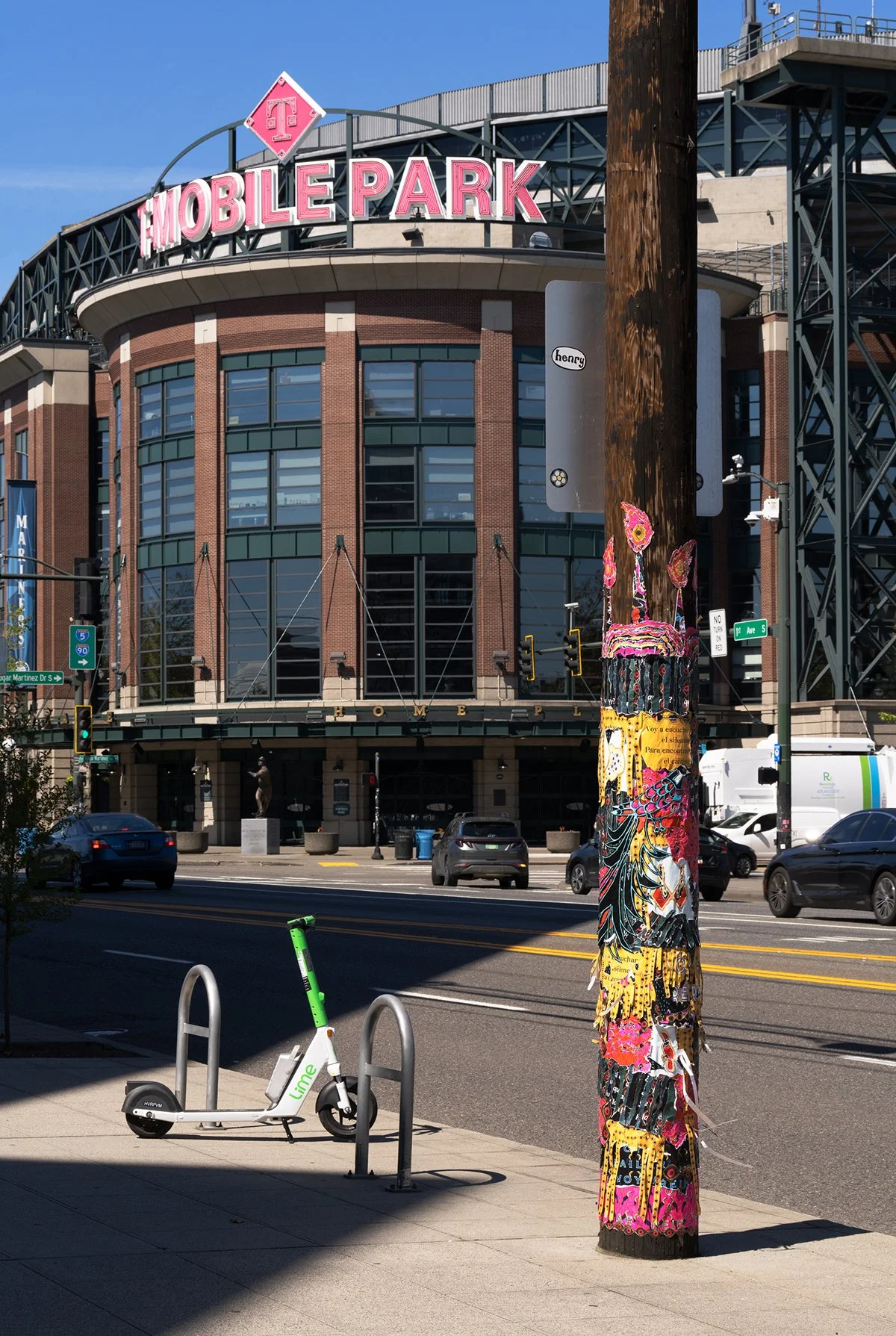
The latest series in the project, Somos lo que crece / We are what grows, is a collaborative project with Karen Woodburn and multiple other contributing artists. Posters carrying imagery and song lyrics conveying our team’s pride in – and longing for – our ancestral cultures and homes form living tributes to the unwavering vitality of Seattle’s immigrant communities. Five original works are weathering on five electric poles on the west side of 1st Avenue between Massachusetts and Atlanticfrom June 12 to August 15, 2026.
Somos lo que crece / We are what grows is part of We Still Dream a Future and made possible with generous support from the Seattle Office of Arts & Culture. All images credit: Jueqian Fang. Scroll down for works descriptions. Thank you to our amazing team: Karen Woodburn, Eddie Oliveira, Rodrigo Moraes Leite, Caro, Temesghen Weldeslassie, Sean Hennessey, Jueqian Fang, and Makenna O’keeffe!
Works Descriptions
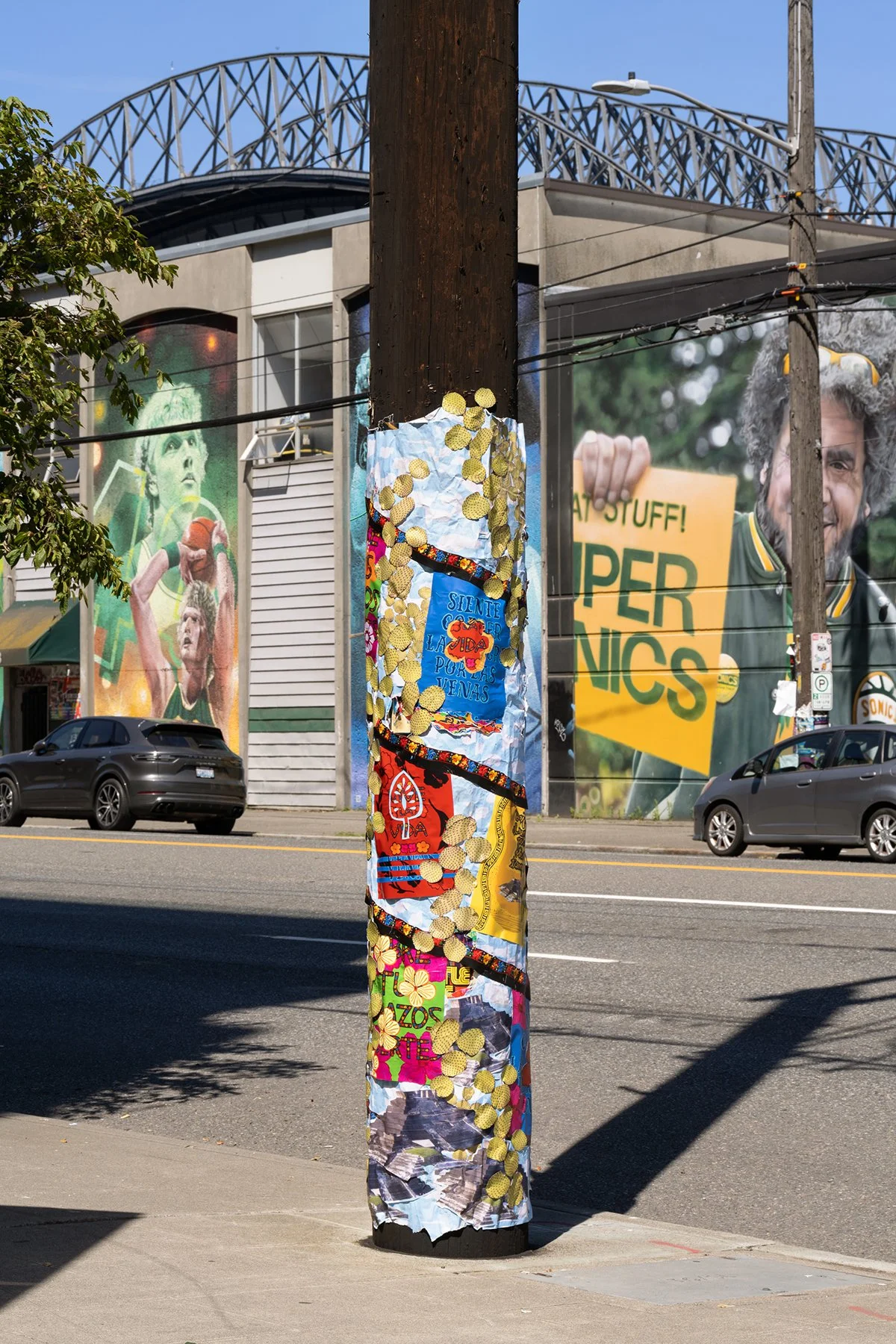
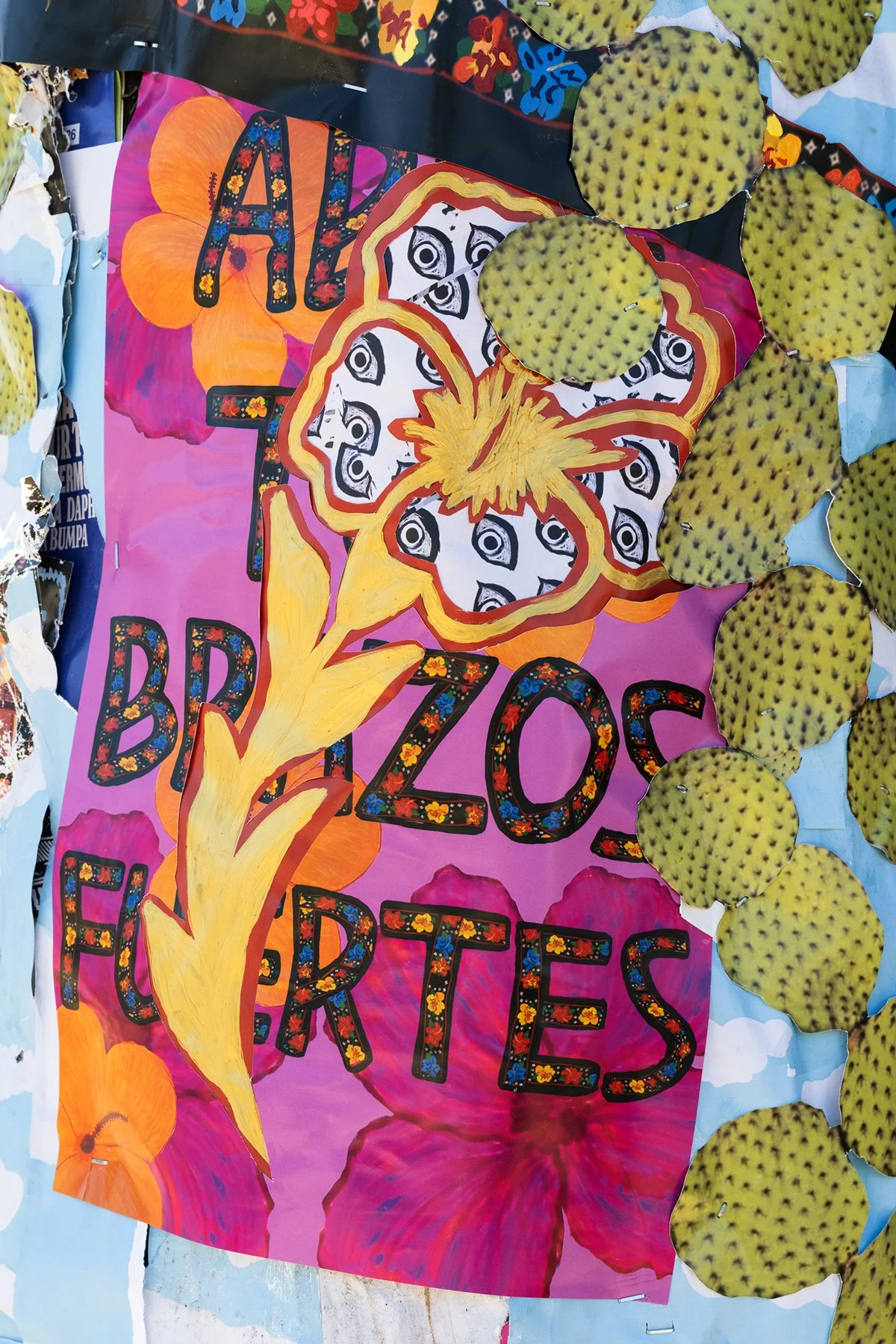
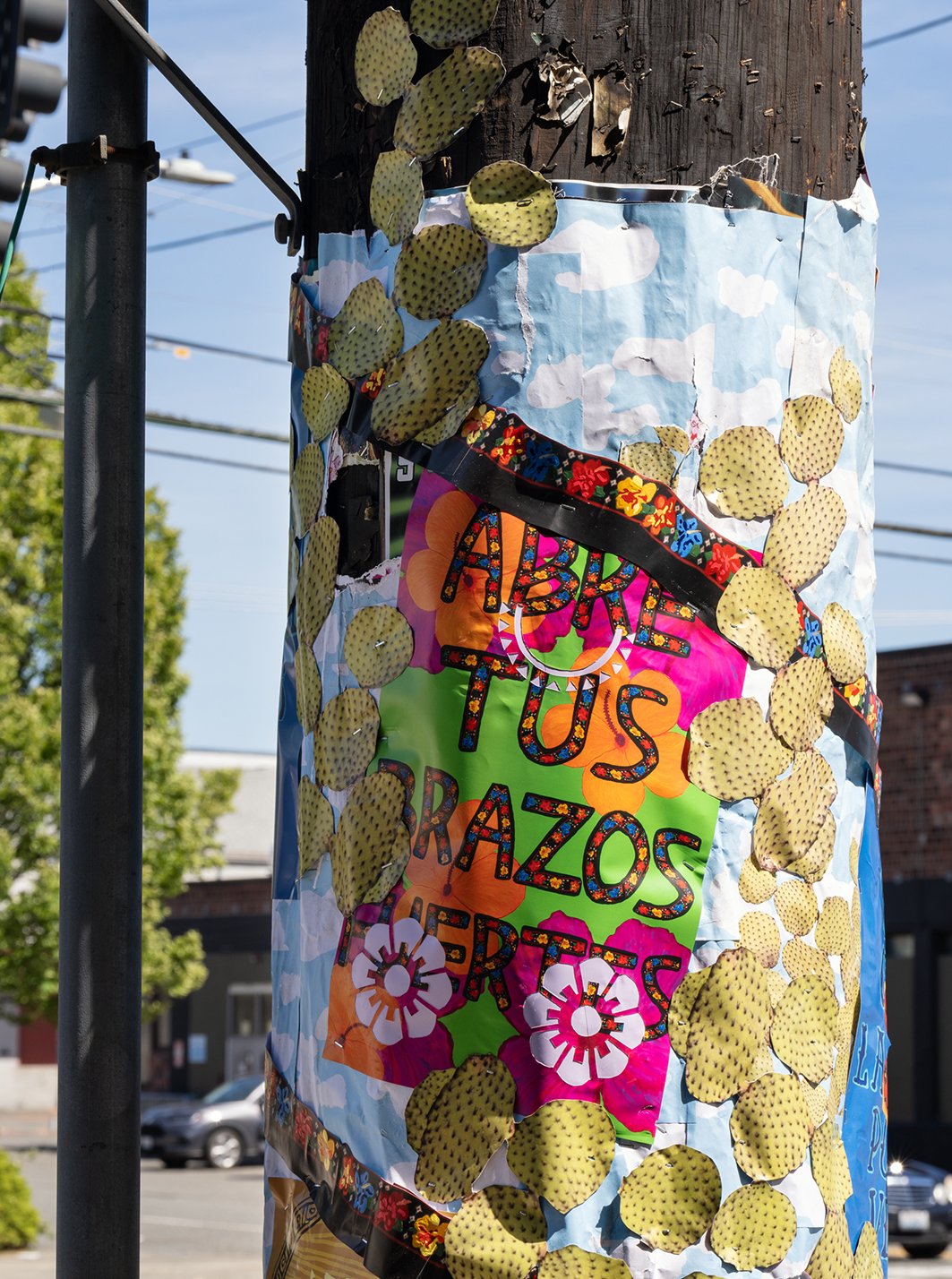
Mexico. By Diana Dvora Falchuk with Caro. Original and harvested posters, acrylic paint, gel medium, staples, linen. 54.75 inches x 102 inches. Designed to honor the Mexican state of Tabasco, this pole is wrapped in a continuous band of the embroidered floral pattern worn by traditional Tabascan female dancers and posters in the papel picado style that carry lyrics from mexican artist José Maria Napoleón’s Vive, which encourages us to live life fully and “deja el rencor por otro tiempo” (leave resentment for another time). Strings of nopal plants grow underneath and on top of the posters and cut-outs of the Mayan Grand Pyramid of Tabasco line the ground.
Afiches originales y recolectados, pintura acrílica, gel medium, grapas, lino. 54,75 pulgadas x 102 pulgadas. Diseñado para honrar al estado mexicano de Tabasco, este poste está envuelto en una banda continua con el patrón floral bordado que usan las bailadoras tradicionales tabasqueñas y afiches en el estilo de papel picado que llevan letras de la canción Vive del artista mexicano José María Napoleón, la cual nos anima a vivir la vida al máximo y “deja el rencor por otro tiempo”. Cuerdas de plantas de nopal crecen debajo y encima de los afiches, y recortes de la Gran Pirámide Maya de Tabasco bordean el suelo.
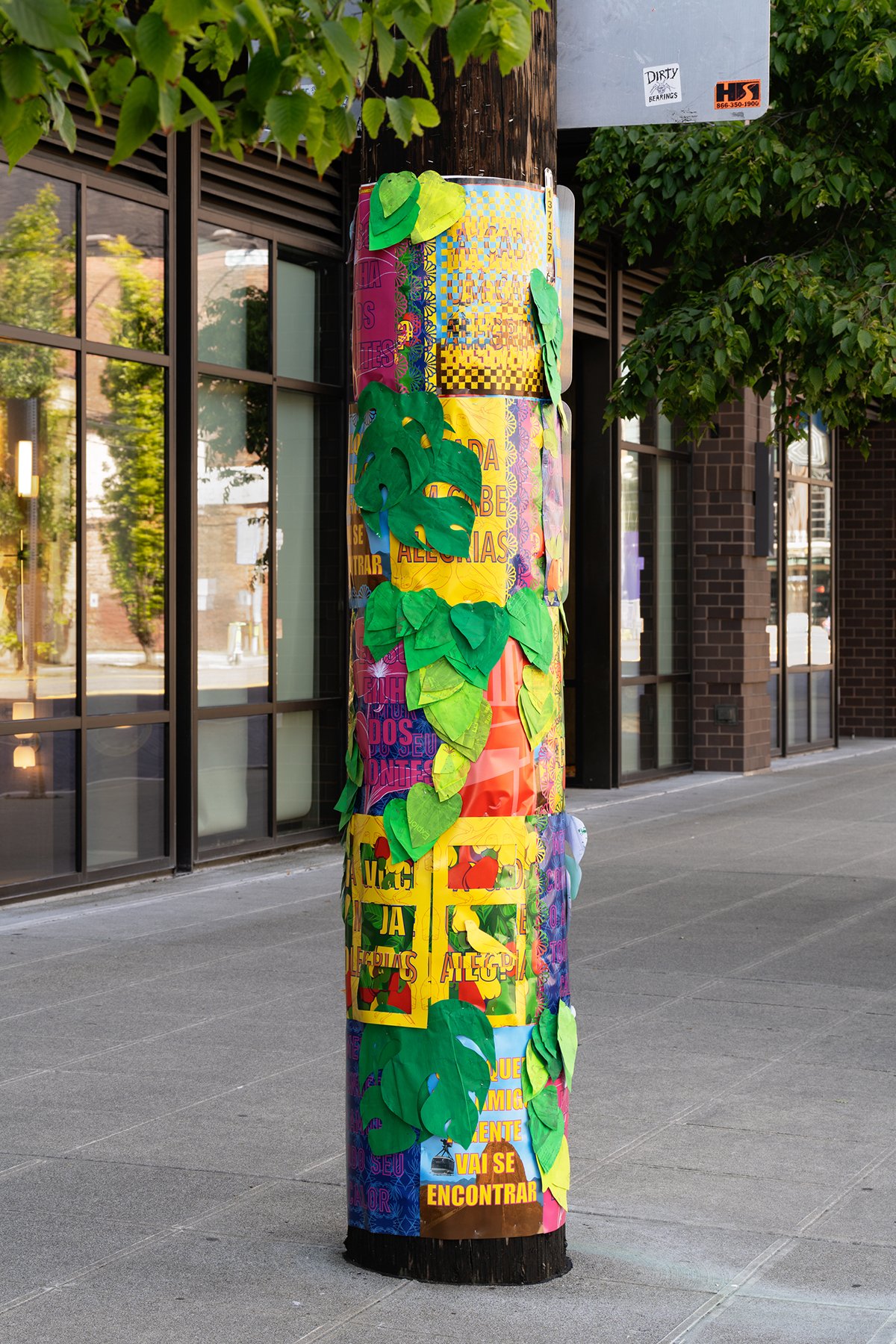
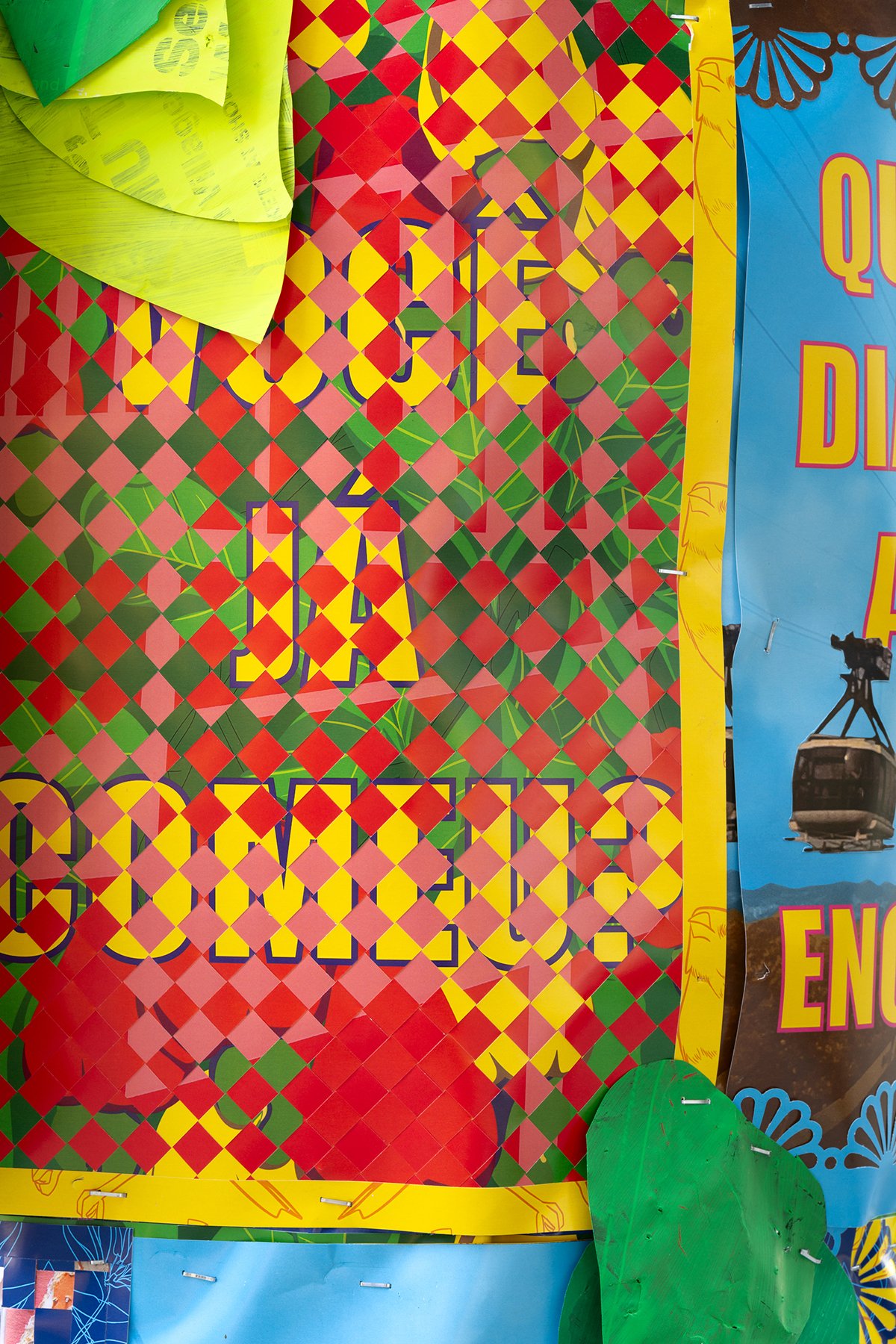
Brazil. By Karen Woodburn with Eddie Oliveira and Rodrigo Moraes Leite. Original and harvested posters, acrylic paint, glue, staples. 54.75 x 85 inches. A love letter to Brazil, this pole is wrapped in vibrant posters featuring cashews, canarhino, lirios, helicôlina, Pão de Açúcar, and Copacabana Beach. Leaves made from an archive of weathered posters emerge from the seams. Lyrics on the posters are from popular Brazilian songs that carry themes of belonging, joy, pride, and love: Seio De Minas by Paula Fernandes, Canção da América by Milton Nascimento, Flor e o Beija-Flor by Henrique & Juliano and Marília Mendonça, and Epitáfio by Titãs.
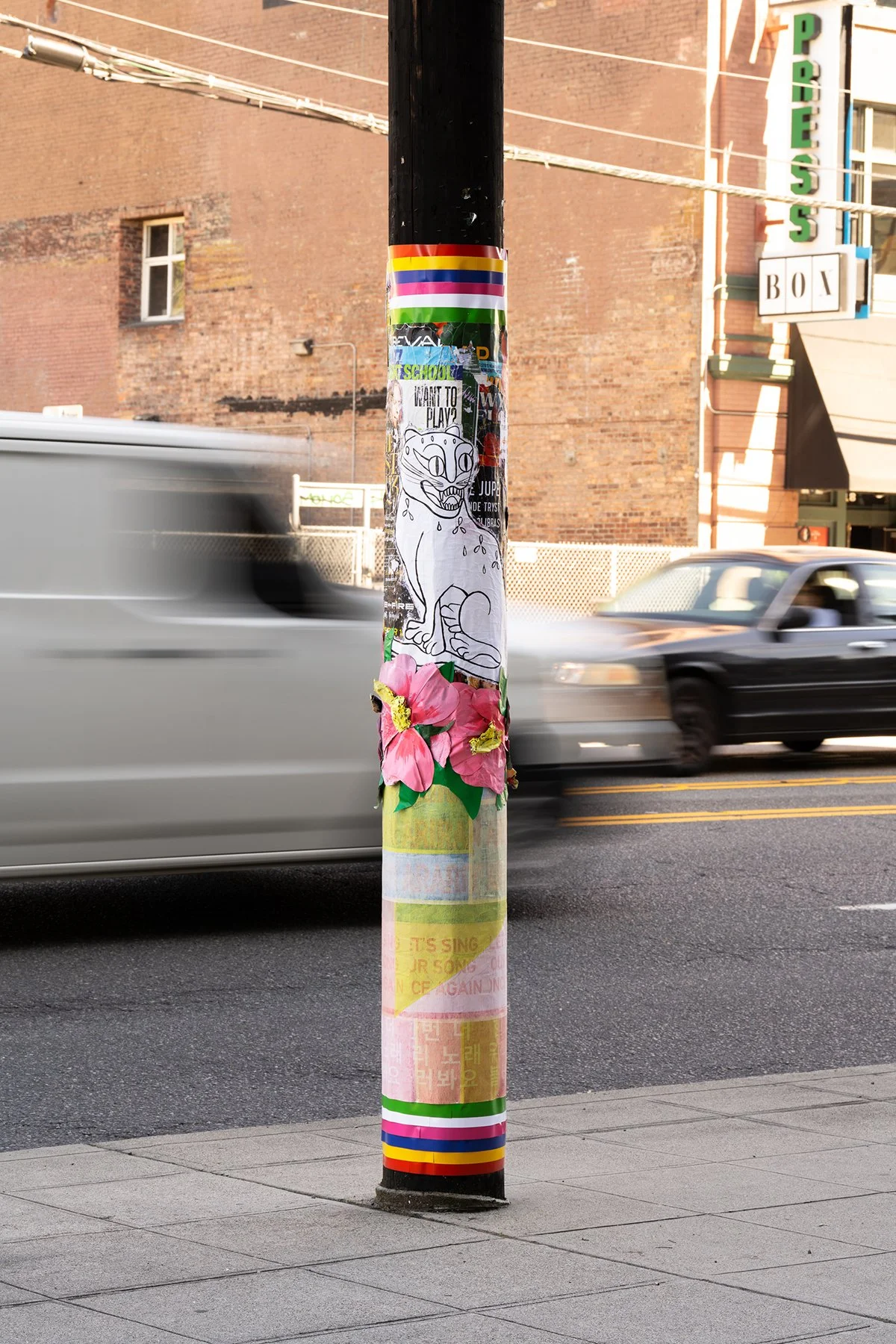
Korea. By Karen Woodburn. Original and harvested posters, crepe paper, acrylic paint, glue, staples. 36 x 90 inches. Created by transnational adoptee artist Karen Woodburn, this design is a tribute to Korea as well as an expression of the challenges involved in reconnecting with a heritage that she was separated from as an infant. Among the weathered posters are a contemporary depiction of kkachi horangi sitting above the national flower of Korea, mugunghwa. Beneath the paper jogakbo is the refrain from Arirang, a traditional folk song and a national symbol embodying han, love, and resiliency, and One Dream One Korea, a modern song created in support of reunification. Saekdong flank the top and the bottom of the design to mimic the sleeves of hanboks that are traditionally worn by young children.
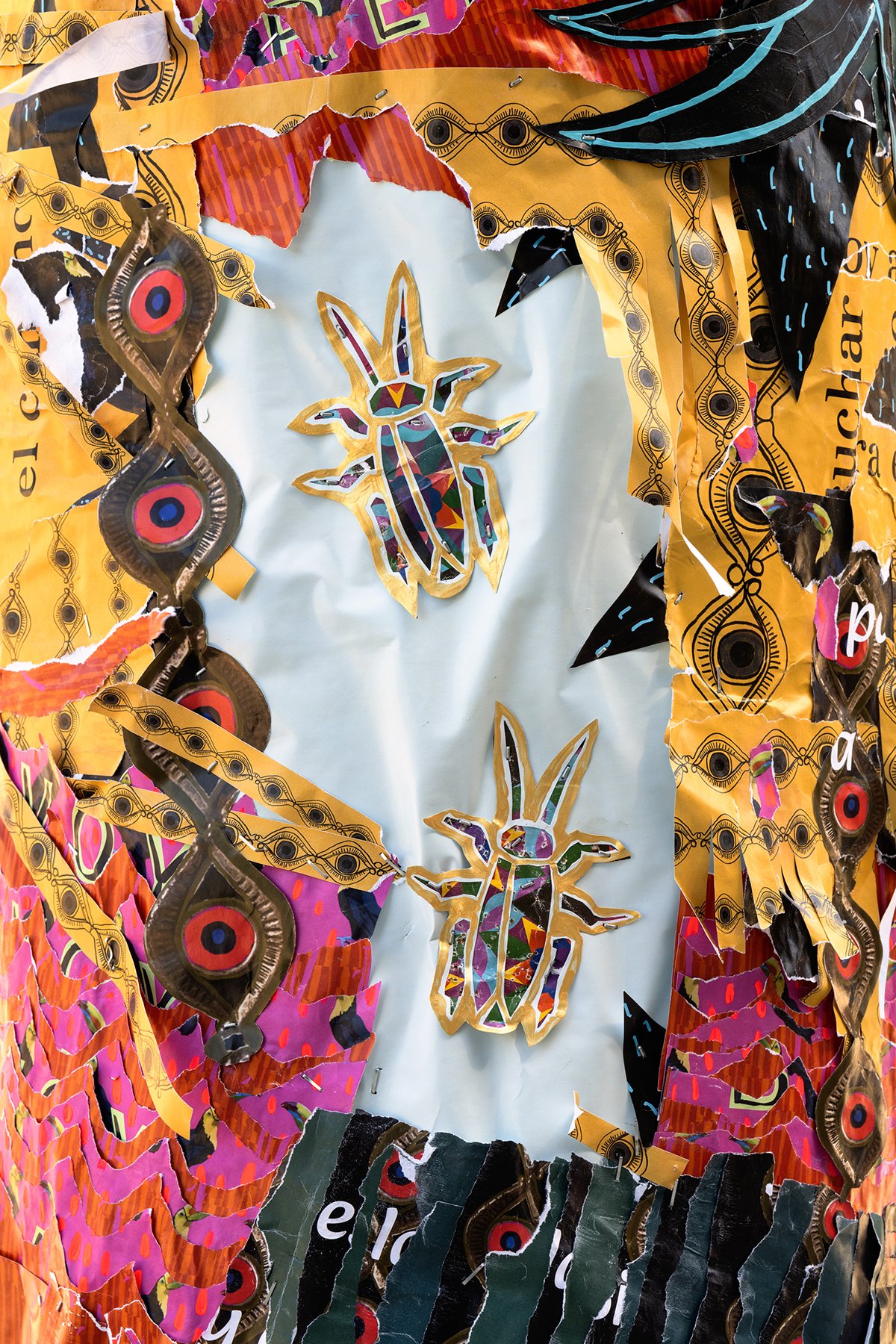
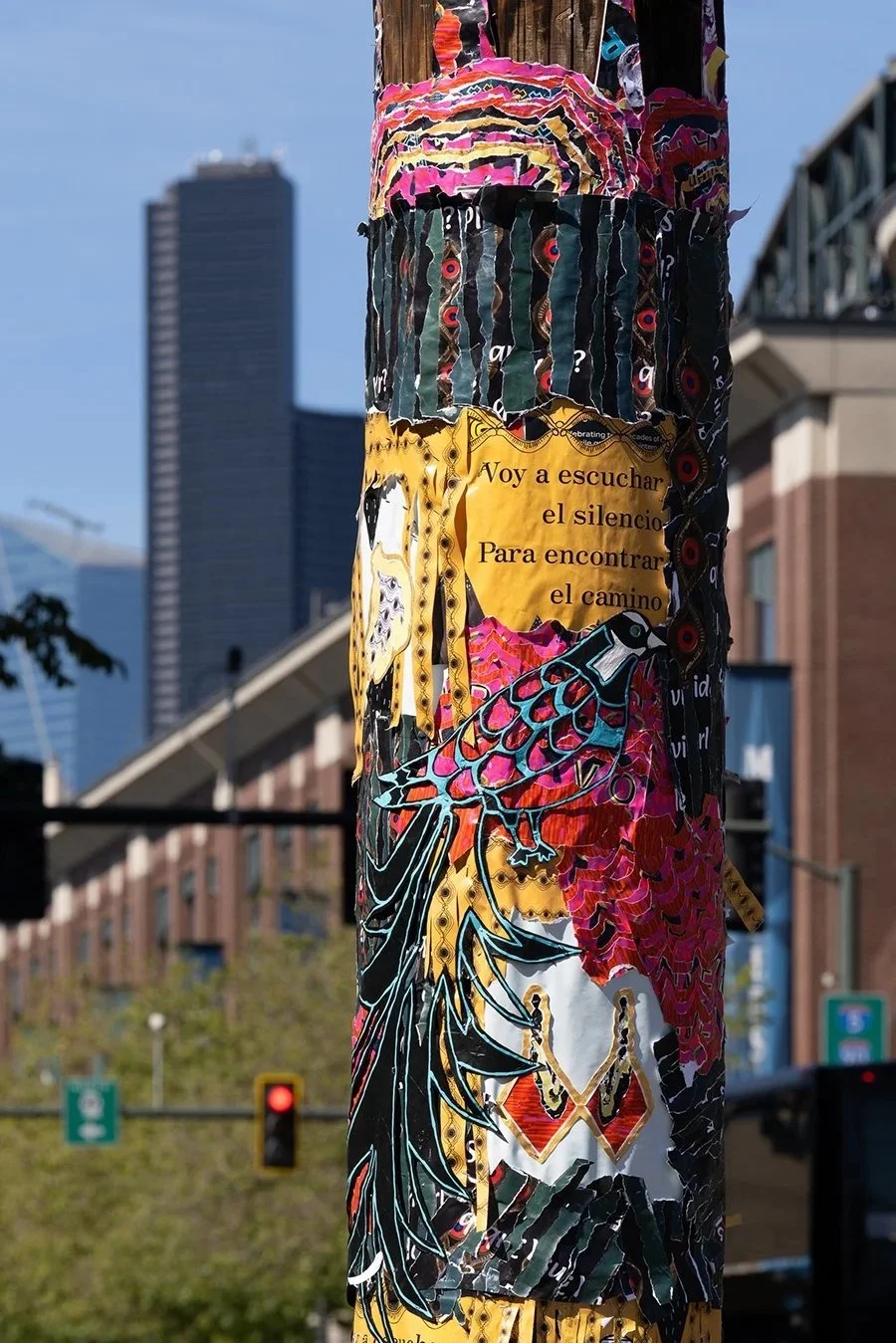
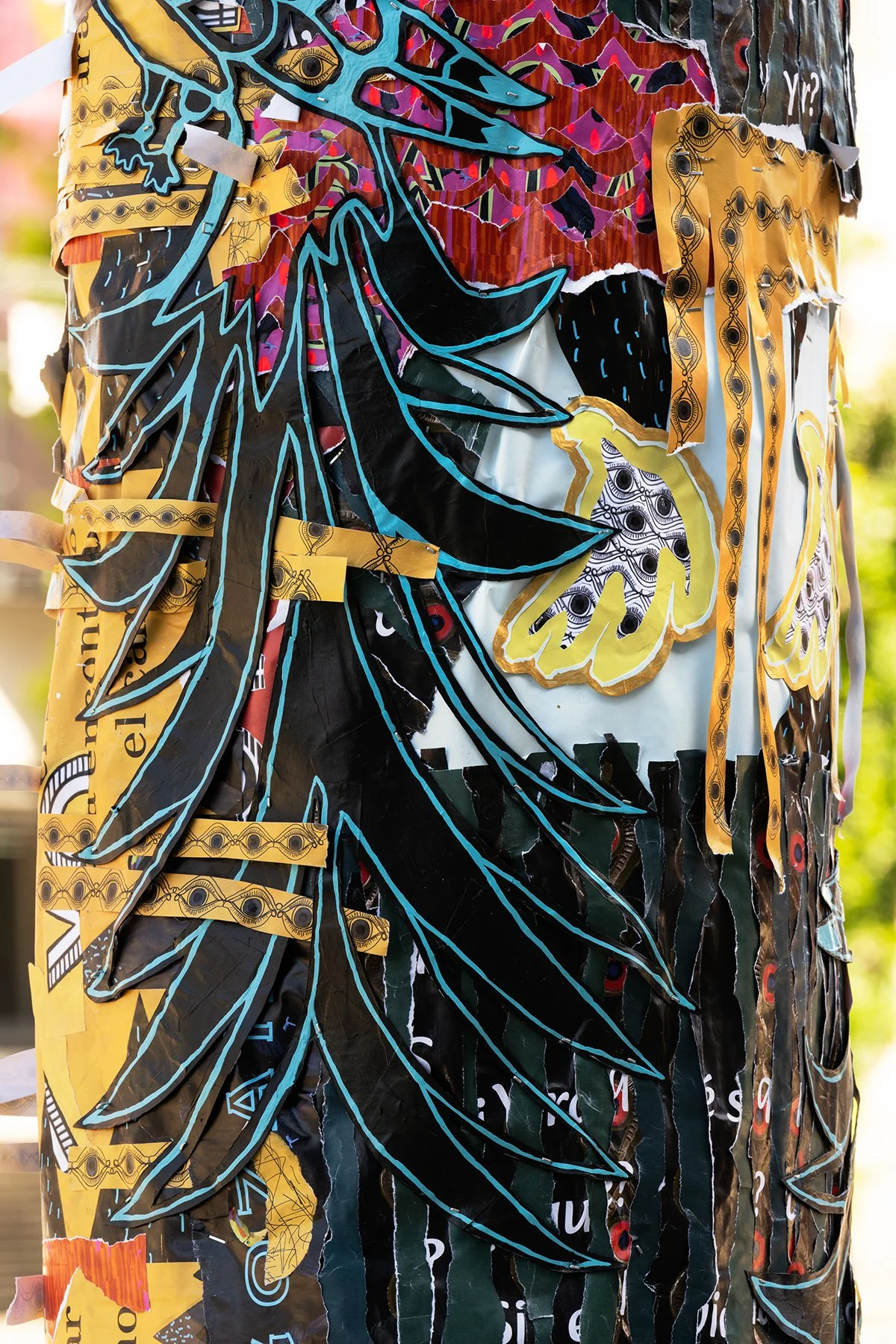
Venezuela. By Diana Dvora Falchuk. Original and harvested posters, acrylic paint, gel medium, staples, linen. 48 x 102 inches. Tucanes, platanos, a mask, cockroaches, evil eyes, family earrings, and the 9-candle Chanukia can be found in this pole representing artist Diana Dvora Falchuk’s Jewish-Venezuelan family. A pair of quetzales pay homage to Venezuelan indigenous artist Luis Montiel hooked-rug art inspired similar works such as those that hang in the artist’s current and family homes. Lyrics from Puerto Rican artist Marc Anthony’s Vivir Mi Vida – known to some as a Latin American resilience anthem – weave throughout the layered surface asking, “¿Para que sufrir?” (Why suffer?) and declaring, “Voy a bailar. Voy a reir. Voy a gozar.” (I will dance. I will laugh. I will enjoy.)
Afiches originales y recolectados, pintura acrílica, medio en gel, grapas, lino. 48 x 102 pulgadas. Tucanes, plátanos, una máscara, cucarachas, mal de ojo, aretes familiares, y la Janucá de 9 velas se pueden encontrar en este poste que representa a la familia Judeo-Venezolana del artista. Un par de quetzales rinden homenaje al artista indígena Venezolano Luis Montiel, cuyos tapetes con ganchillo inspiraron obras semejantes que cuelgan en las casas actuales y familiares del artista. Líricas de la canción del artista puertorriqueño Marc Anthony, Vivir Mi Vida – conocido por algunos como un himno de resiliencia latinoamericano – se entrelazan por toda la superficie en capas preguntando, “¿Para qué sufrir?” y declarando, “Voy a bailar. Voy a reír. Voy a gozar.”
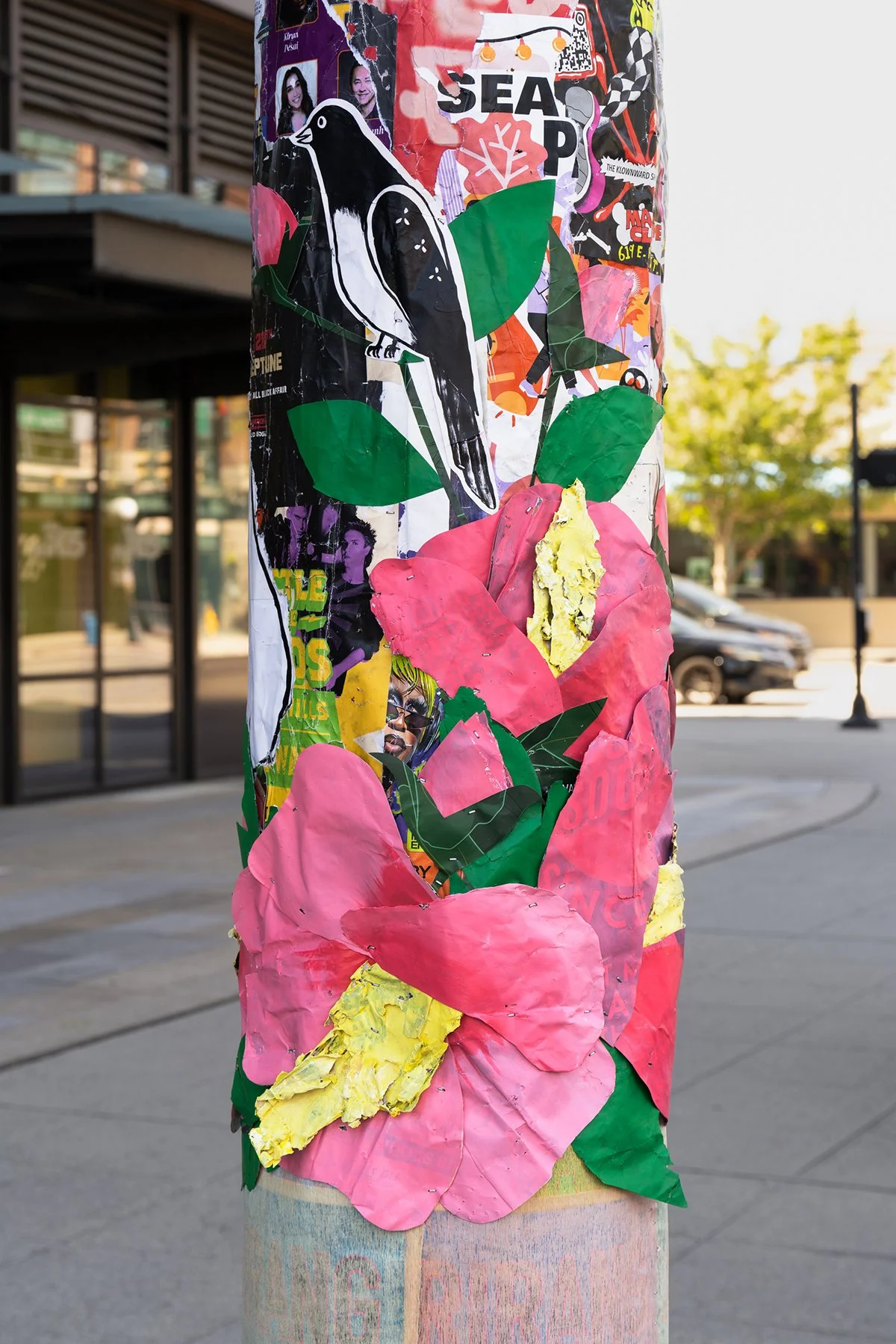
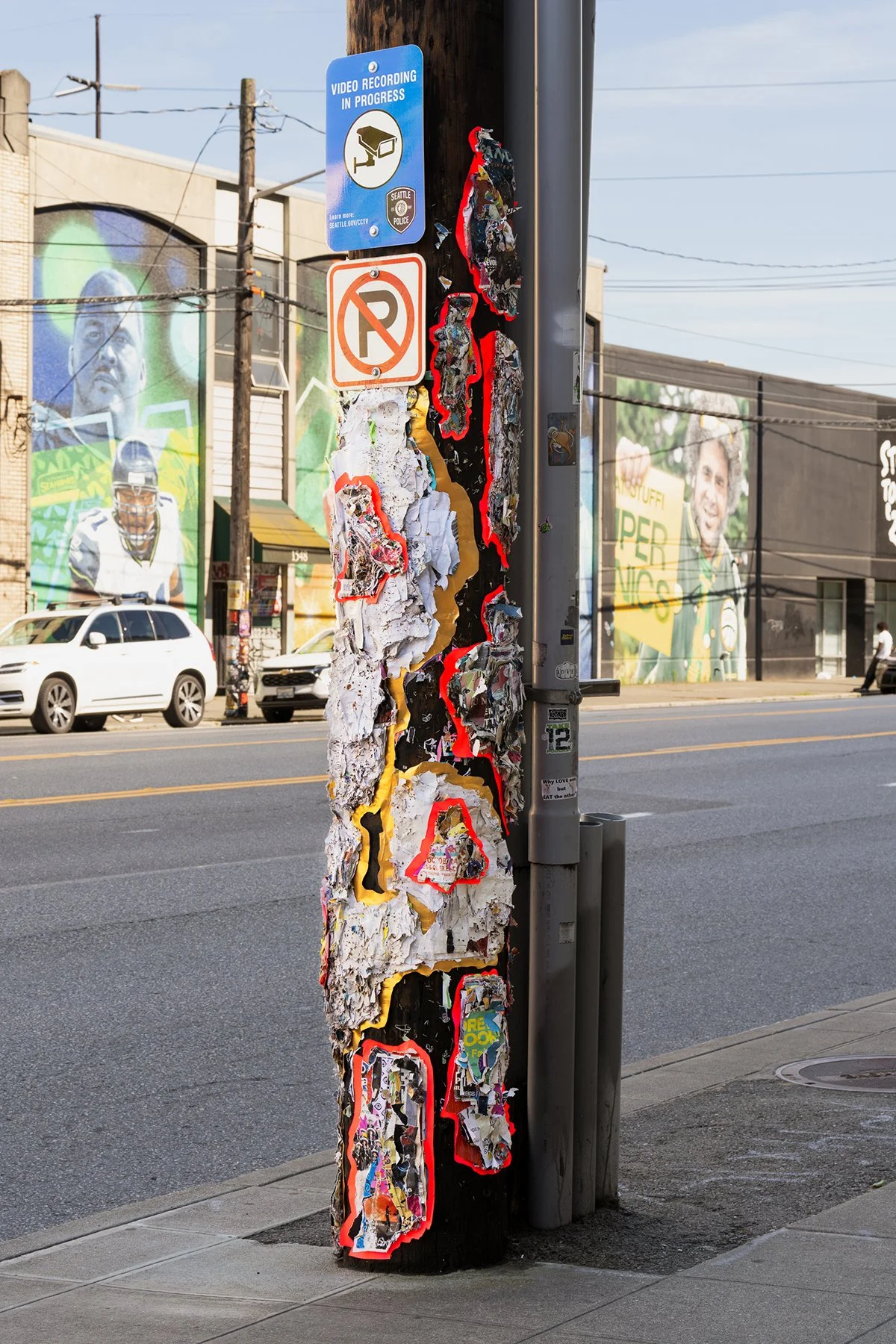
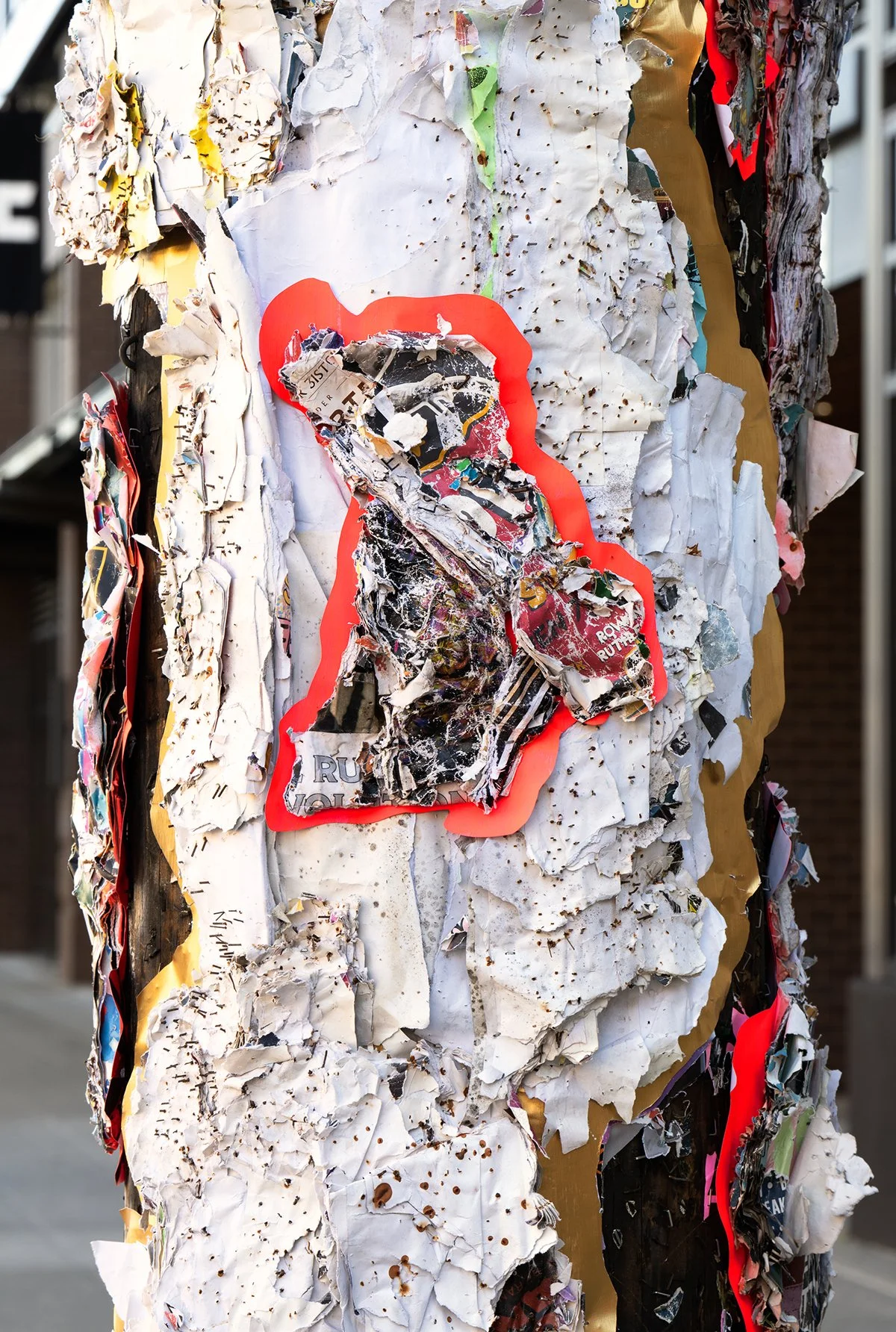
Untitled (aka, The Middle Pole). By Karen Woodburn and Diana Dvora Falchuk. Harvested poster chunks, backs of new posters, acrylic paint, glue, staples. For this pole, our team chose to spotlight the raw materials that inspired The Utility Pole project: aged, accumulated layers of posters that we’ve harvested from Seattle’s poles. Large chunks of staple-riddled, damaged, white back sides are surrounded by smaller chunks of weathered, colorful front sides. Tiny pieces of original posters used in the other four artworks are tucked into the layers of the front sides, as if placed there by many hands over time. Gold and day-glo red outline the chunks, calling attention to their beauty.